Improving Effective Professional Learning
A Call to Action
Making education count for all students is a true passion of mine. Working in under served communities has afforded me the opportunity to understand how important equitable education and experiences are for all students. Creating opportunities that enable students to learn and develop their knowledge heavily relies on the knowledge and skill capacity of the teacher.
Educators must understand teaching is more than just showing up day after day to collect a paycheck. We have been charged with preparing the future minds of the next Century. Students need advocates that build self images and stretch their critical thinking. I believe by doing so students gain confidence and dream big. President Barack Obama experienced teachers who advocated for every child while encouraging students to welcome challenges with tenacity. As a result, today we know young Barack as President Barack Obama. More teachers are needed to impact students' lives in such a way that will propels students to reach unthinkable achievements. Although most teachers strive to be impactful, truth is many miss the mark. Studies (Gulamhussein, 2013) have shown a high percentage of teacher growth within the first five years of the profession. However, after the fifth year, teachers began to digress or flat line their learning and creative thinking. As a result, teacher effectiveness decreases. Ultimately revealing that teacher are neglecting to meet the needs of the students. Professional learning is needed to address ineffective teaching practices. Professional development should intentionally focus on the needs of current students (Daniels,2013). And professional development should present more learning opportunities for teachers to get it right.
It is no secret that most teachers hate professional development. For good reason though. It's like experiencing going to the movies for a feature that has been pumped up by marketing. Finding out at the end of the movie how much of a waste of time and money it was. Traditional PD's leave the same feeling for teachers even if they go into the PD with a great attitude. Presenters mean well, but time consuming sessions with excessive amounts of information that is unfamiliar does not feel helpful. Can you relate? I can't count the number of times I have attended a PD session and the presenter was really nice or knowledgeable about the topic but, failed to incorporate ways that would benefit relevant classroom implementation. I can even remember a time I tried implementing a new strategy and my appraiser criticized me for missing the mark. Unbelievable! This is when my growth mindset kicked in and I began to take ownership of my own learning with the purpose of improving.

While on my journey, along the way Lamar University' graduate class, 5389 Developing Effective Professional Development introduced researched ideas and practices that transform PD's to learning experiences. Within the same course I have been challenged with calling my campus to act on and incorporate effective professional learning principles that have proven to be successful.
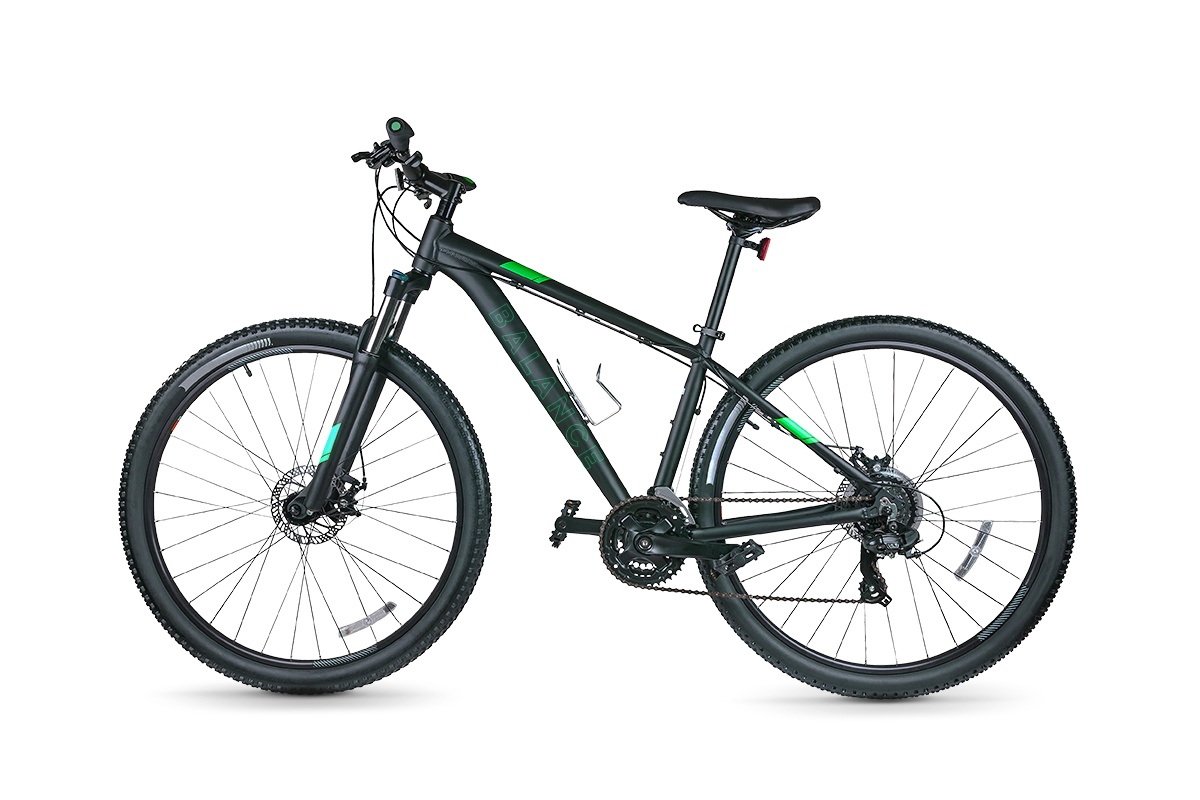
It is understood that before teachers can develop and master skills, they must first learn and practice the skills. I think of it as learning to ride a bike. Learning to ride a bike takes dedicated time. Some learn quickly and some take more time than others. But, time is needed to learn and practice. During the process, individuals look to a person for support and modeling while physically and actively practicing verses just watching. Finally individuals ensure the right height is utilized so that the feet touch the pedal. Effective professional learning follows the same outline.
Principals for Effective Professional Learning 1. Duration of Time Practicing 2. Support from Coaches3. Active Practice 4. Observing Models of Successful Implementation 5. Content Specific to needs
In my call to action presentation, I am calling campus administrators, teacher leaders, and teachers to do three things. 1st acknowledge the purpose of professional development. 2nd consider the benefits of professional learning and how it aligns with the school improvement plan. 3rd make the change to support teachers growth and our future leaders of America.
Creating a powerful call to action required me to assess previous experiences of personal and professional learning. I reflected on great take away tools I have received along my teaching journey and how often that occurred. Reality hit fast after noticing that great take away tools came far and few between within my eight years of teaching. Feelings of disappointment surfaced fast. If I felt that way, I'm sure there were many more. I always try my best to encourage, prepare, and stretch my scholars thinking and perseverance. But, I can't help but to think how much more impactful I would be if my campus embraces effective professional learning principals. PD can be learning opportunities and good use of time. While preparing my call to action presentation, I also realized students depend on my growth to activate their growth. Every learning opportunity I experience my students experience too. Of course, I was excited while creating the call to action presentation. I love finding solutions to problems and I love helping solve problems. With honor I presented a call to action for effective professional development while channeling most teachers' feelings, my feelings and harsh realities for my students who live in underserved communities.
The presentation platform I chose to convey my message is CANVA. It is much like
power point but with more versatility to the templates. I was able to choose a template of my choice and add realistic picture that did a great job of
expressing my thoughts and ideas. Prior to this assignment, I really didn't have formal presentation skills. Preparing for my presentation introduced many do's and don'ts that would be essential for anyone to hold the attention of an audience. The art of compelling others to sway in the direction of my thoughts and findings is something that I would like to continue to explore. My favorite feature of CANVA is the presenter voice record. It left a nice personable touch to my message even though it's not face to face. Utilizing CANVA for my call to action did not come easy. There was a learning curve that took two days to overcome. Relentlessly I kept at it. My call to action has inspired me to always remember its not what you say but, how you say it.
The secret of change is to focus all of your energy, not on fighting the old , but on building the new.
-Socrates
The secret of change is to focus all of your energy, not on fighting the old , but on building the new.
-Socrates
References
Andrews, T. M., Leonard, M. J., Colgrove, C. A., & Kalinowski, S. T. (2011). Active Learning Not Associated with Student Learning in a Random Sample of College Biology Courses. CBE Life Sciences Education, 10(4), 394-405. https://doi.org/10.1187/cbe.11-07-0061
Center for Public Education, 2013. Teaching The Teachers Effective Professional Development In An Era Of High Stakes Accountability. pp.16-21.
Daniels, K. (2013, November 6). Empowering the teacher technophobe. Theme: Education without boundaries. Burnsville, Minnesota, United States. Retrieved August 29, 2020, from https://youtu.be/puiNcIFJTCU
Duarte, N. (2009, December 16). Five Simple Rules for Creating World Changing Presentations. Retrieved August 29, 2020, from https://www.youtube.com/watch?v=hT9GGmundag&feature=youtu.be
Duarte, N. (2010, December 10). TEDxEast - Nancy Duarte Uncovers Common Structure of Greatest Communicators. Retrieved August 29, 2020, from https://www.youtube.com/watch?v=1nYFpuc2Umk&feature=youtu.be
Goodwin, B. (2015). Research Says/Does Teacher Collaboration Promote Teacher Growth? Educational Leadership, 73(4), 82-83. Retrieved from https://www.ascd.org/publications/educational-leadership/dec15/vol73/num04/Does-Teacher-Collaboration-Promote-Teacher-Growth%C2%A2.aspx
Hill, H. C. (2015). Review of The Mirage: Confronting the hard truth about our quest for teacher development. Boulder: National Education Policy Center. Retrieved August 29, 2020, from https://www.greatlakescenter.org/docs/Think_Twice/TT-Hill-TNTP.pdf
TNTP. (2015). The Mirage: Confronting the hard truth about our quest for teacher development. New York: TNTP, Inc. Retrieved August 29, 2020, from https://tntp.org/publications/view/evaluation-and-development/the-mirage-confronting-the-truth-about-our-quest-for-teacher-development